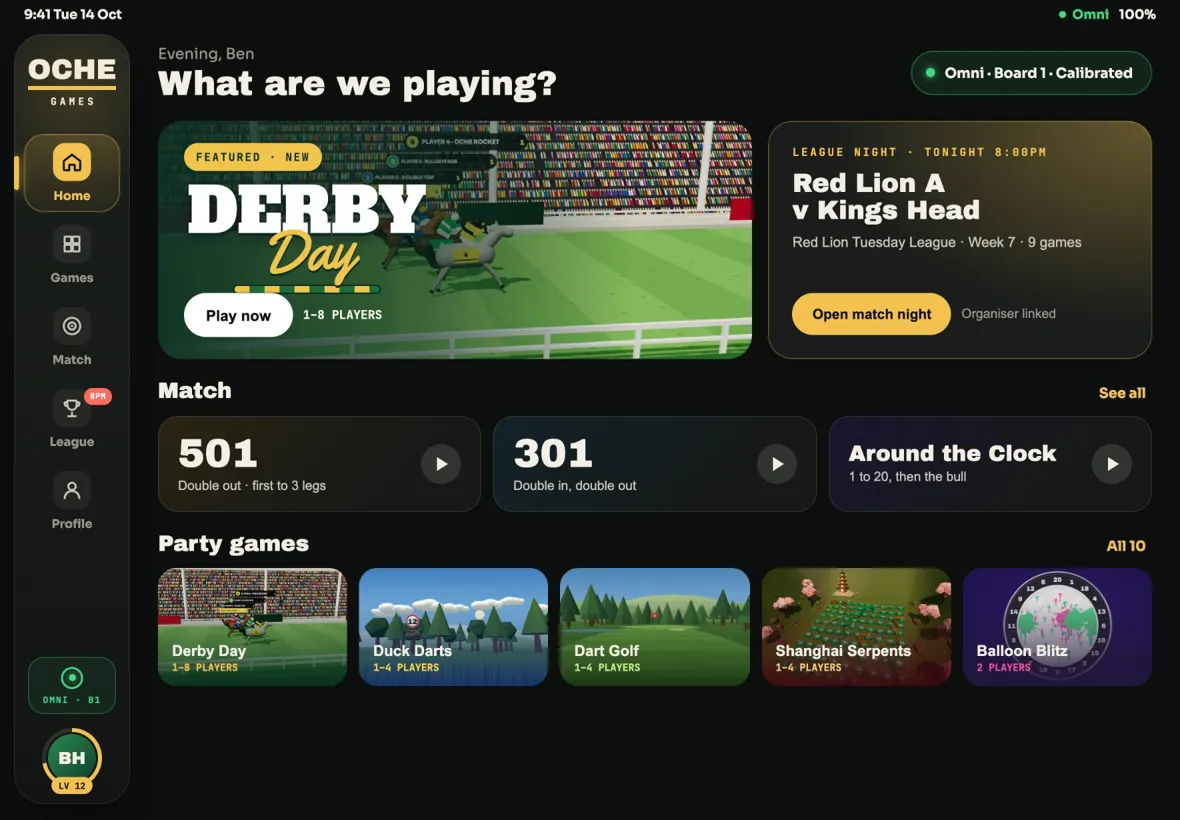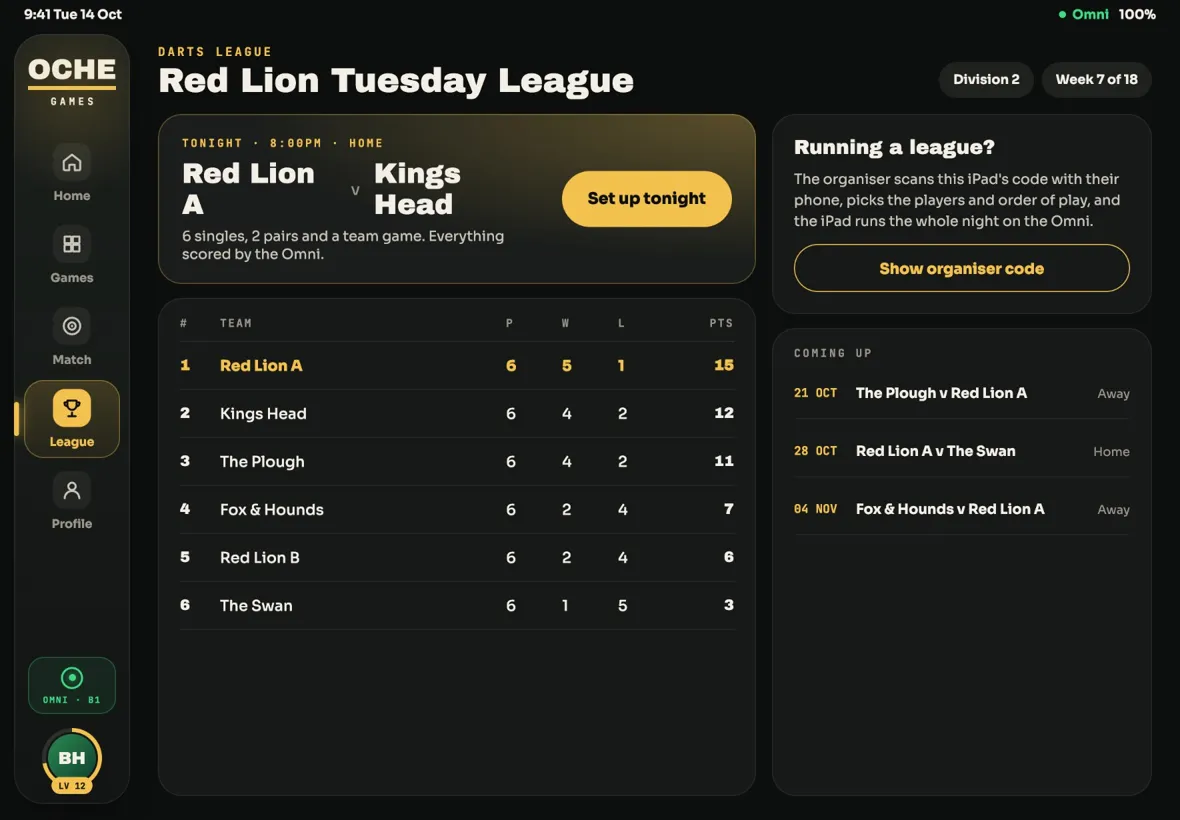
Most of us “practise” darts by playing 501 on our own, badly, until we get bored. It feels productive. It isn’t really, because you spend most of the time throwing at the treble 20 in a relaxed way that has nothing to do with match pressure, and almost no time on doubles.
Good practice is short, focused and measured. These games give you all three.
First, what is your average?
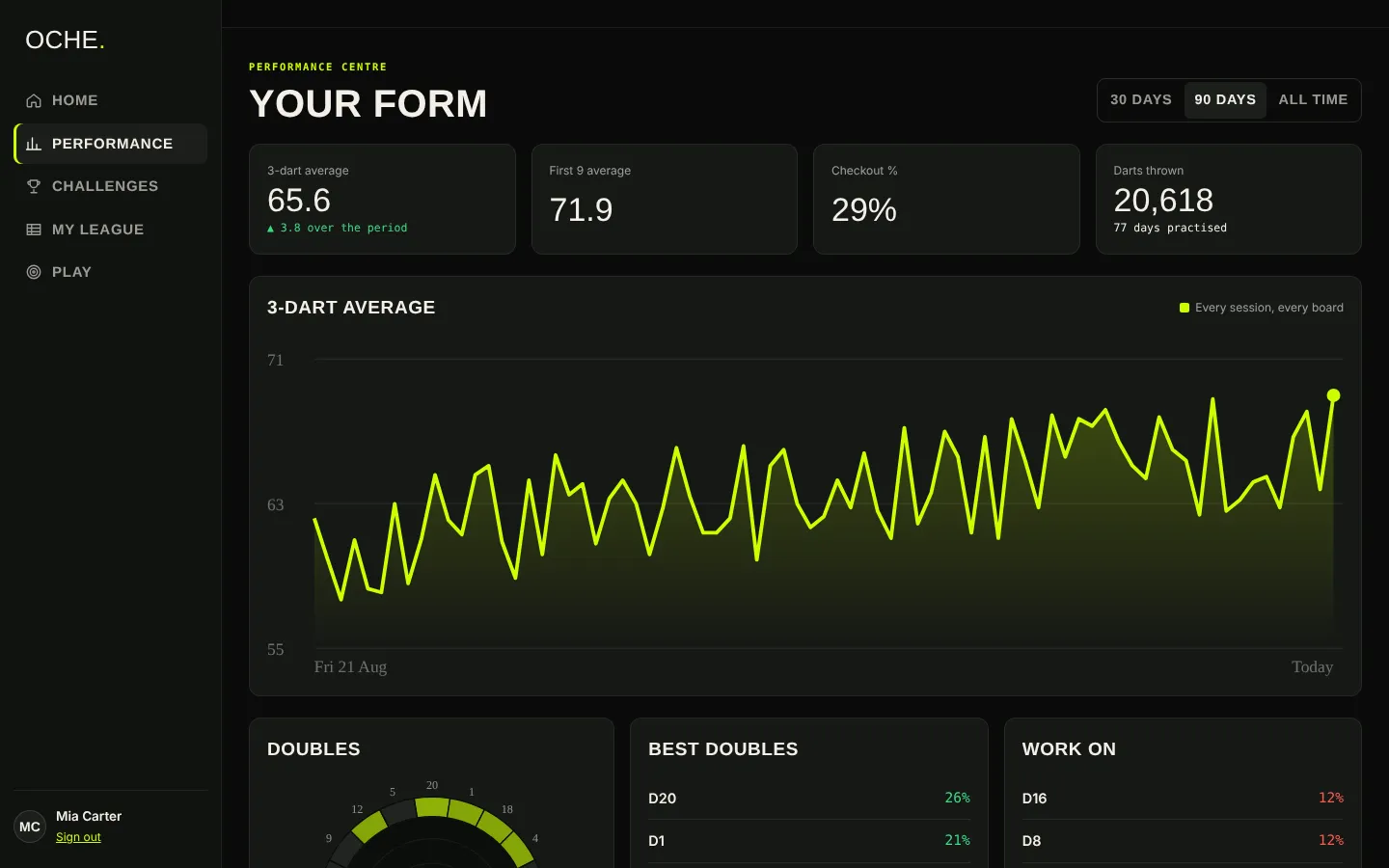
Your three-dart average is the total you’ve scored divided by the darts you’ve thrown, times three. Score 501 in 18 darts and your average is 83.5. It’s the number most players use to measure themselves, and it goes up when two things improve: your scoring (big trebles) and your finishing (fewer darts at doubles).
Scoring games
100 darts at the treble 20
Throw 100 darts at the 20, add up your total and write it down. Do it twice a week. It’s boring, which is the point: it builds a repeatable throw. Your score out of 100 darts is a great number to track month by month.
Around the Clock (trebles only)
Normal Around the Clock is 1 to 20 in order. The practice version is trebles only. It forces you to move round the board and adjust, which is exactly what you need when your first dart blocks the 20 (rules).
Cricket against yourself
Close 15 to 20 and the bull in as few darts as possible. Count darts. Beat it next time. It builds treble accuracy on more than just the 20 (rules).
Doubles games
27
The classic doubles drill. Start on 27 points. Throw three darts at double 1: every hit adds double 1’s value. If you miss all three, take double 1’s value away. Then double 2, all the way to double 20. Drop to zero or below and it’s game over. A full round is brutal, and a score above zero is something to be proud of.
Shanghai
Seven rounds, one number per round, and single, double and treble of that number in a visit wins outright. It trains you to switch between the three rings of one number, which is what a checkout is (rules).
Checkout games
121
Start on 121 and give yourself nine darts to check out. Make it and move up to 122; miss and drop back. It builds the route knowledge that wins legs. If you’re not sure of a route, our checkout calculator has every finish from 170 down.
Dart Golf
Not a drill, but secretly one of the best checkout trainers around. In Dart Golf on OCHE the yardage is the score you need and each visit is a shot, so you’re constantly aiming for exact numbers. That’s finishing practice that doesn’t feel like it. See how to play darts golf.
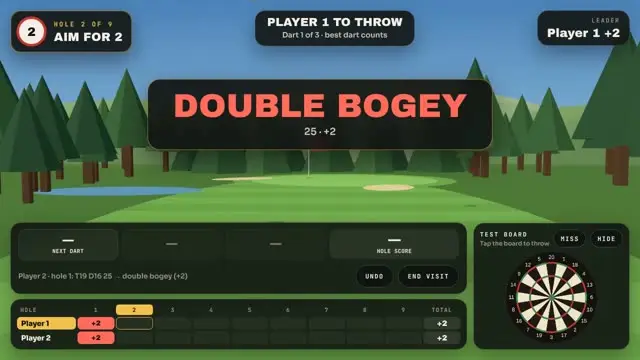 LivePlay it on OCHEDart GolfReal courses with real yardages. Each visit is a shot. Hit the exact yardage for a hole in one.1–8 players
Match practice
501 against Dartbot
Once a week, play real legs against someone who doesn’t get bored. On OCHE, Dartbot plays at your level and pauses like a real thrower, so you get a little of the pressure of a proper match. Set it slightly above your average and try to win a best-of-five.
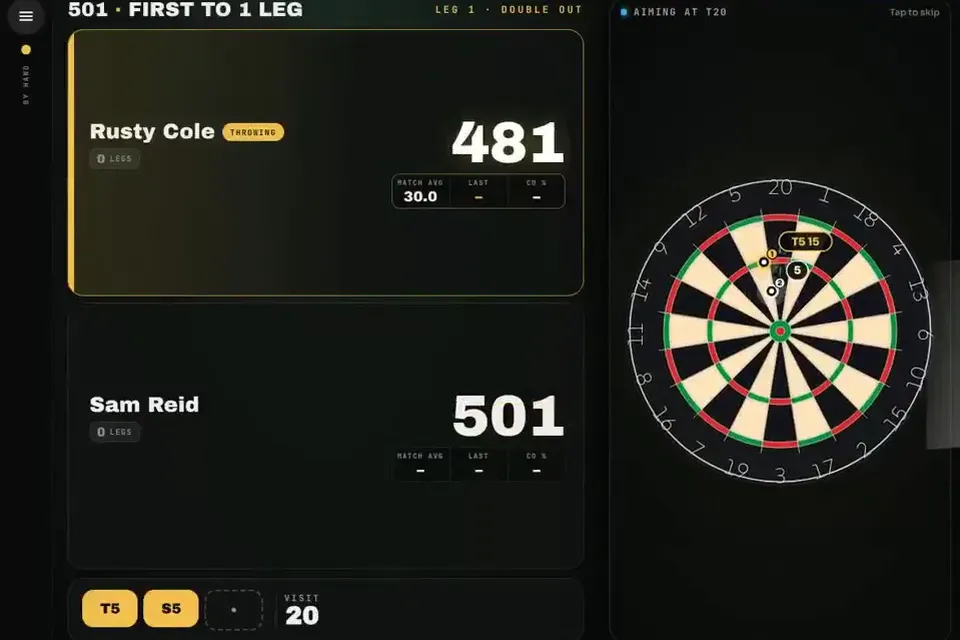 LivePlay it on OCHE501 and 301Real 501 and 301 with live checkout routes, and Dartbot when nobody’s round.Classic
A simple weekly plan
Four short sessions beat one long one. Here’s a plan that takes about 30 minutes a go.
| Day | Warm-up | Main game | Finish with |
|---|---|---|---|
| Monday | Around the Clock, singles | 100 darts at T20 | 5 minutes of doubles |
| Wednesday | Around the Clock, trebles | 27 | 121 checkout |
| Friday | Cricket against yourself | Shanghai | Dart Golf, 9 holes |
| Sunday | Any warm-up | 501 vs Dartbot, best of 5 | Check your stats |
How fast will my average go up?
Honestly, it depends where you start and how you practise. Newer players usually see the quickest gains, because small fixes to stance, grip and rhythm add up fast. Further up, progress is slower and comes mostly from doubles and from fewer wasted darts when you’re on a finish.
What matters is that you can see it. Measure the same things every week, like your 100-dart total, your 27 score and your checkout percentage, and look at the trend over a month, not a night. A bad session after a long shift tells you nothing; four weeks of numbers tell you a lot.
Tips that actually help
- Little and often. Twenty focused minutes beats two hours of drifting.
- Warm up first. A few minutes of Around the Clock before anything you’re measuring.
- Practise doubles every session. It’s where most legs are lost.
- Write it down, or let an app do it. Progress you can see keeps you practising.
- Mix in fun. Practice you enjoy is practice you’ll actually do.
Practice on OCHE
OCHE’s training games cover scoring, doubles, checkouts and grouping, from beginner to pro, with live checkout routes after every dart and a full stats history. In beta, the OCHE Rating turns five rated games into one number for your real level, and the practice coach reads your stats and sets today’s session.
It all works on a Target Omni straight away, Scolia, Unicorn SEER, your phone camera (in beta), voice scoring (say “Score”, then the score) or manual entry. More on training and stats, and when you’re ready to put it to use, start a darts career in Pub to Pro.